
Estimated reading time: 15 minutes
The Browning BAR Mk II Safari is one of those rifles that can make a bolt-gun loyalist raise an eyebrow after the first shot. It is classy, quick on follow-up shots, and surprisingly gentle in a caliber that still gets real hunting done.
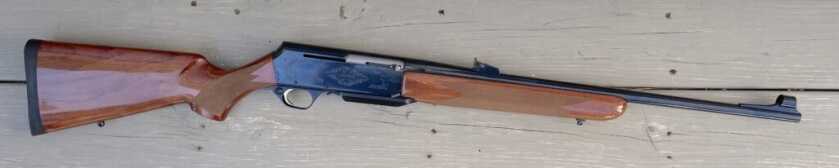
Table of contents
- From Battlefield BAR to Deer Camp Icon
- Why the Browning BAR Still Earns a Spot on Your Bucket List
- Browning BAR Specs That Made It a Semi-Auto Legend
- Browning BAR Models Explained Without the Headache
- Range Time With the Browning BAR Mk II Safari in .270 Win.
- Browning BAR Mk II Safari Specifications
- Pros and Cons of the Browning BAR Mk II Safari
- Final Verdict on the Browning BAR Mk II Safari
- Related Reads from GunsAmerica Digest
From Battlefield BAR to Deer Camp Icon
The Browning BAR, pronounced B-A-R, was originally designed by John Browning in 1917 and adopted by the U.S. military in 1918 as the M1918 BAR, or Browning Automatic Rifle. The BAR was a lightweight select-fire rifle that chewed through 20-round magazines of .30-06 Springfield ammo at a rate of about 500 to 650 rounds per minute. The action used a long stroke, gas-operated piston.
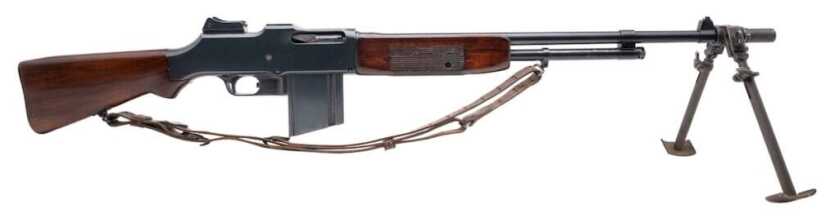
The BAR saw limited service in the trenches of WWI, but during WWII and the Korean War, there was a BAR issued to every 12-man squad to provide automatic cover fire. The BAR had a lot of name recognition with GIs returning home. Many of those veterans were hunters, and Browning leveraged the mystique of the military rifle in the sporting version of the BAR rifle when it was introduced in 1968. The hunting version of the BAR had the same humpback, flat side receiver of the military BAR, except these rifles were semi-automatic and chambered in a who’s who of popular hunting calibers.

Why the Browning BAR Still Earns a Spot on Your Bucket List
Back in the 1980s, which would be the late 20th century, many deer hunters brought semi-automatic rifles to camp. They were either a Remington or a Browning. Sure, there were a few other brands, but the Remington and the Browning were the top dogs. The BAR really set the bar, pun intended, for a semi-automatic hunting rifle in terms of quality of build, the grades of the rifles, which ranged from plain to luxurious, and the performance. A Browning BAR was an aspirational purchase and definitely held a higher social status than a Remington Model 740, 742, 7400, or 750. Back then, a gorgeous piece of wood, a polished blue finish, and an engraved receiver were desired. Today, the most popular semi-automatic hunting rifles are AR15s and AR10s. Current hunters think more in terms of polymer furniture, forged aluminum, and customization.
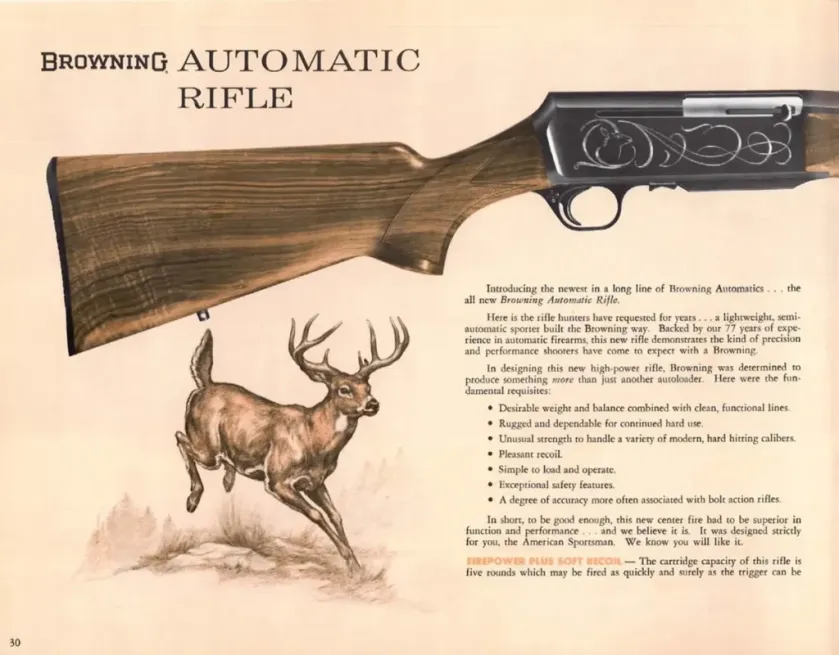
You owe yourself the experience of shooting a lightweight, semi-automatic hunting rifle chambered in traditional high-power calibers like the .243 Winchester, .25-06 Remington, .270 Winchester, .270 WSM, .308 Winchester, 7MM-08 Remington, 7mm Remington Magnum, .30-06 Springfield, .300 Winchester Magnum, or .300 WSM. Calibers that are typically reserved for a bolt-action rifle. The BAR offers a fast follow-up shot, is accurate, offers a surprisingly soft recoil that makes a follow-up shot easier and faster, and is lightweight and easy to carry. That is a big reason the Browning BAR review still matters today.
Browning BAR Specs That Made It a Semi-Auto Legend
Like its namesake, the sporting version of the BAR uses a gas piston-operated system. The piston is compact and situated inside the forend. The BAR uses a rotating bolt with seven locking lugs for sturdy lock-up. The gas system runs clean and only needs maintenance after 1,000 rounds, according to Browning. More on that later. Browning advertisements back in the day said the BAR’s action provided bolt-action strength and accuracy.
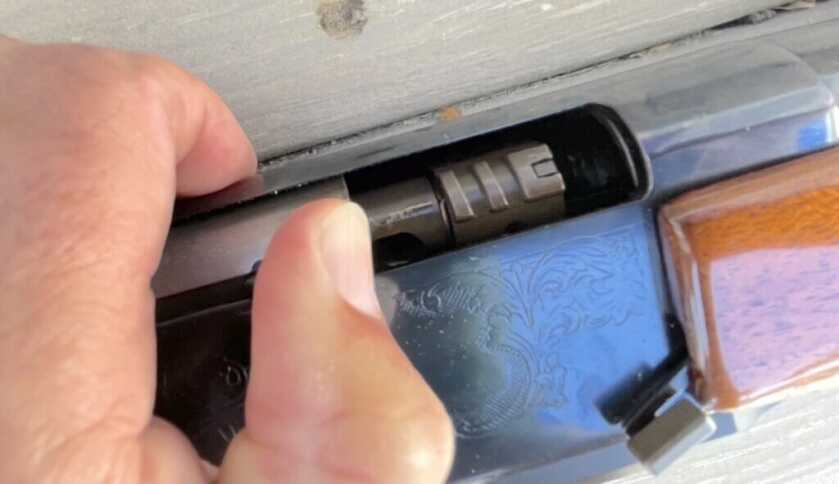
The receiver on the original BAR was steel, and barrel lengths were 22-, 23-, and 24-inches. The 23-inch length was reserved for WSM calibers, and the longer 24-inch length for magnum calibers.
Unique to the BAR is a trap door magazine system. The magazine is attached to the hinged floor plate, so the magazine can easily be loaded while attached to the floor plate. The magazine can also be detached from the floor plate in case the user prefers a separate, fully loaded magazine. I like this system. If you have ever been in a tree stand and dropped a magazine or dropped a magazine in deep snow, you know what I mean.
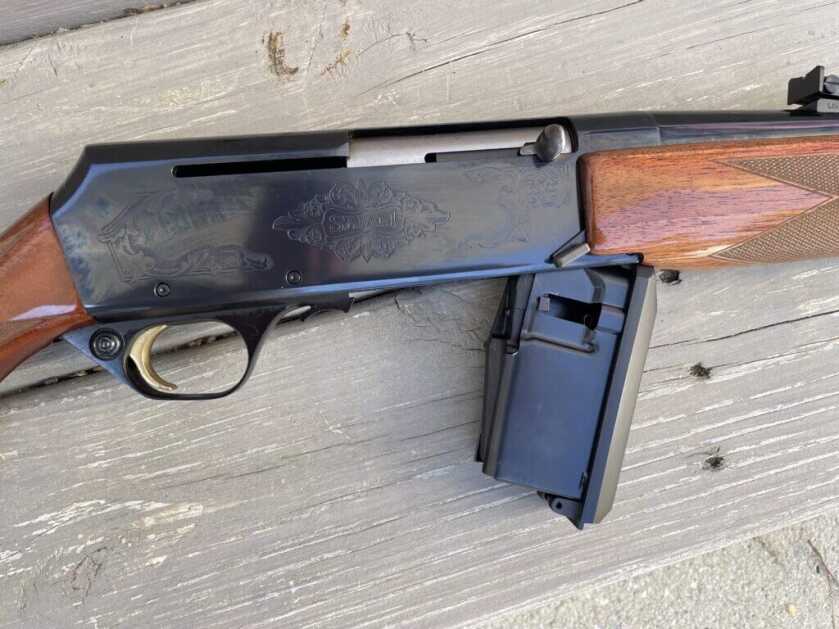
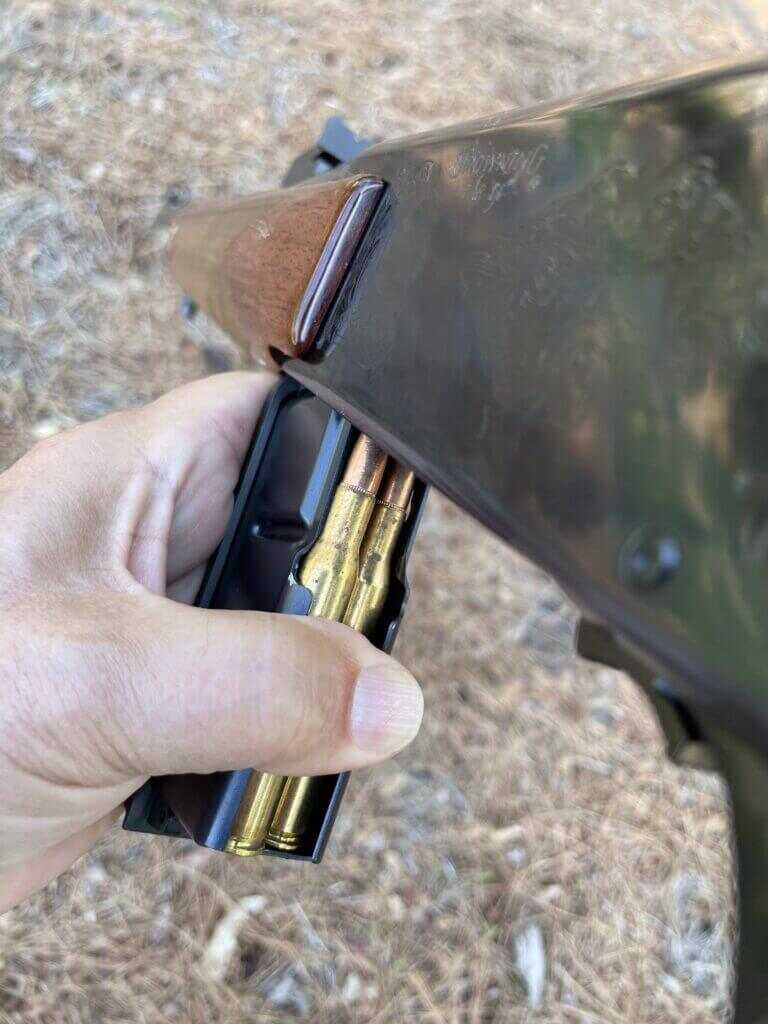
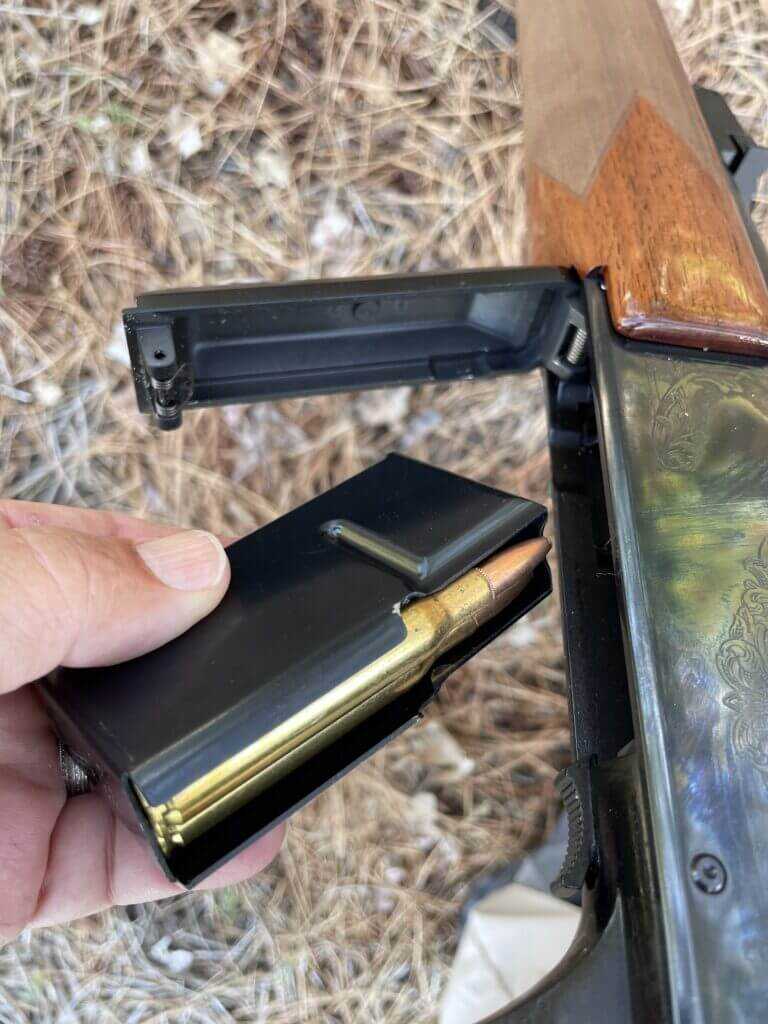
Original models had iron sights, while newer models did away with irons. All, however, are drilled and tapped to mount a scope.
Stocks were typically beautiful pieces of walnut, hand checkered, but as the BAR design evolved, synthetic stocks were introduced in camo as well as Cerakote-flavored finishes on metal surfaces.
Browning BAR Models Explained Without the Headache
The BAR has been in continuous production since 1967 and has gone through numerous design changes. Here is a cheat sheet on the model variants.
Browning BAR: The BAR, when first introduced in 1967, was available in standard calibers, .243 Win., .270 Win., .280 Rem., .308 Win., and .30-06, as well as magnum calibers, 7mm Rem. Mag., .300 Win. Mag., and .338 Win Mag. I have a pal whose dad shoots a BAR in .338 Win. Mag. He calls it The Finger of God. Everything he has shot with drops in its tracks. The original BARs were built between 1992 in Belgium and fetch a higher value. All later models are assembled in Portugal. Original models were first introduced in two grades. Grade I was a simple blued receiver model. Grade II featured better wood and a blued, engraved receiver. Additional grades, Grade III, Grade IV, and Grade V, were introduced, which were more lush than the previous grades. The quick way to spot an original BAR is the receiver. If there are no pins in the receiver, it is an early BAR.
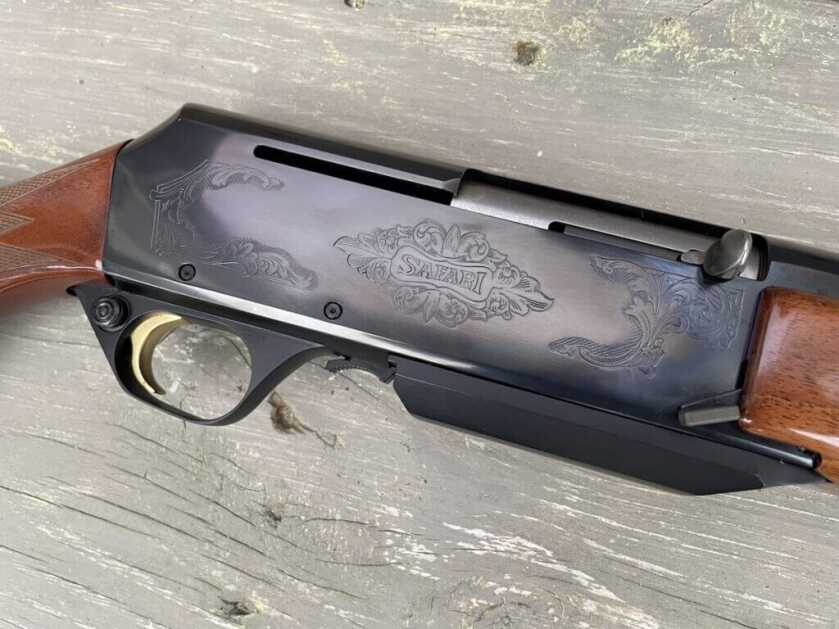
Browning BAR Mk II Safari: In 1993, Browning improved the bolt release, gas system, and trigger assembly. Barrel lengths varied according to caliber and were 22, 23, or 24 inches. Gold triggers became standard with the Mk II guns. Some models were fitted with a BOSS, Ballistic Optimizing Shooting System, which was essentially a muzzle brake. A Lightweight model was made from 1997 to 2003 with a lighter alloy receiver. During the Mk II period, Browning introduced synthetic stock models called the Stalker. The quick way to spot a BAR Mk II is by the two pins in the receiver that hold the trigger assembly in place.
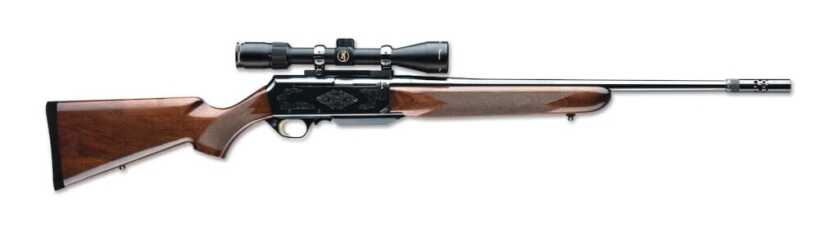
Browning Mk 3: In 2016, the Mk 3 was introduced with a re-styled receiver profile and rifles in right and left-hand variants. Barrel length ranged from 18 inches to 24 inches, depending on the caliber and model. The DRM was an 18-inch barrel variant in .308 Win. with a 10-round detachable magazine. Various Cerakote colors and camo finished stocks were available on the Hell’s Canyon Speed, Speed, and Camo variants.

Browning BAR ShortTrac and LongTrac: These rifles were produced from 2004 to 2015 and featured new styling on the receiver. Both use a gas piston system. The ShortTrac was chambered in short action calibers, .243 Win., .270 WSM, .300 WSM, .308 Win., 7mm-08 Rem., 7mm WSM, and .325 WSM. LongTrac variants were chambered in long action calibers, .270 Win., .30-06, .300 Win. Mag., or 7mm Rem. Mag. A shim-adjustable stock was added with the ShortTrac and LongTrac models.

Browning BAR Mk 4: The Mk 4 design is the latest model and evolutionary. The biggest change was that the barrel threads into the receiver, like most other rifles, instead of a clamped-fit barrel on previous models. Of course, Browning changed the cosmetics on the rifle to suit contemporary hunters.

Range Time With the Browning BAR Mk II Safari in .270 Win.
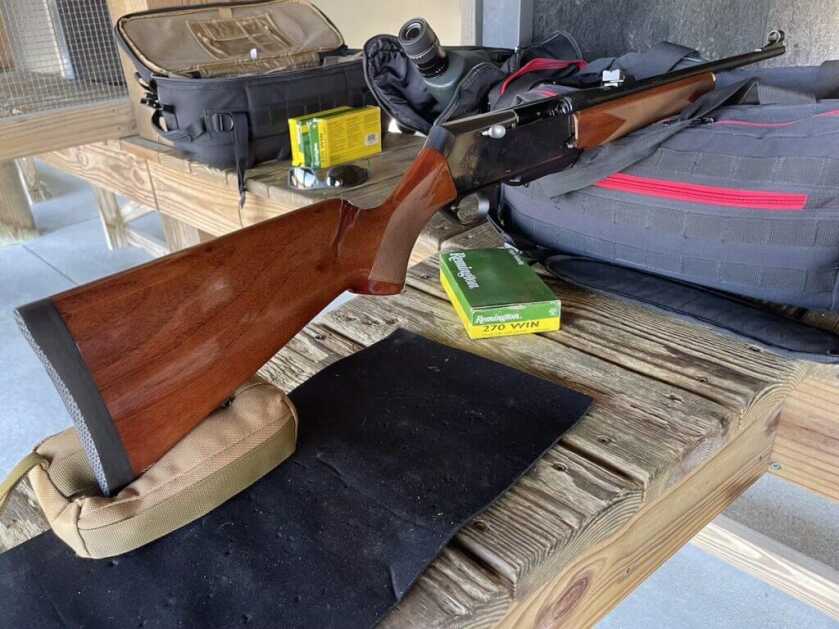
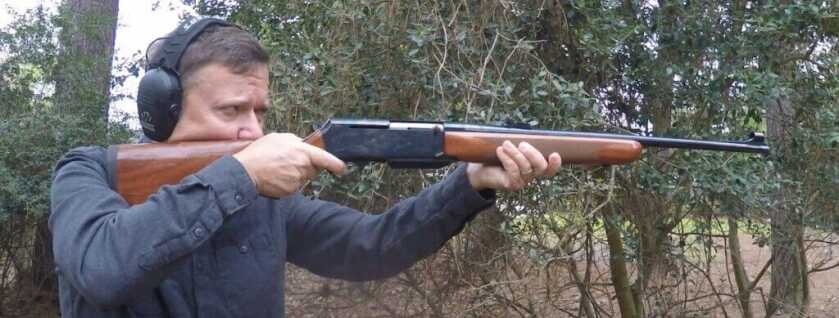
I had a BAR in the back of my gun safe that hadn’t seen the light of day for years. I used it for deer hunting in thick timber where a quick shot is required. I never mounted a scope to it because I liked how it shouldered and loved the open sights. It was also relatively light at about 7.5 pounds.
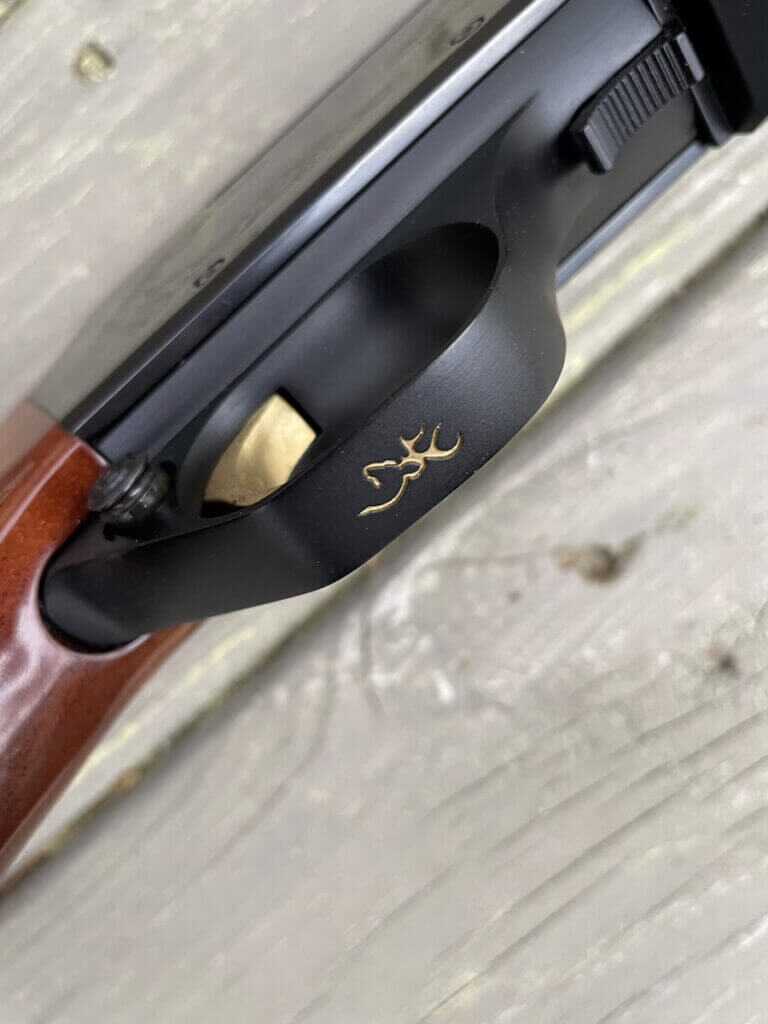
This BAR is chambered in .270 Win. and is a Grade I, which sports a nice checkered wood stock with a glossy finish. A classic Browning characteristic. A thick rubber recoil pad helps tame recoil. The metal wears a polished blue finish, and it wears it well. The receiver is engraved. The trigger guard is also engraved with the Browning logo and gold-filled. The trigger is gold-plated, another Browning trademark.
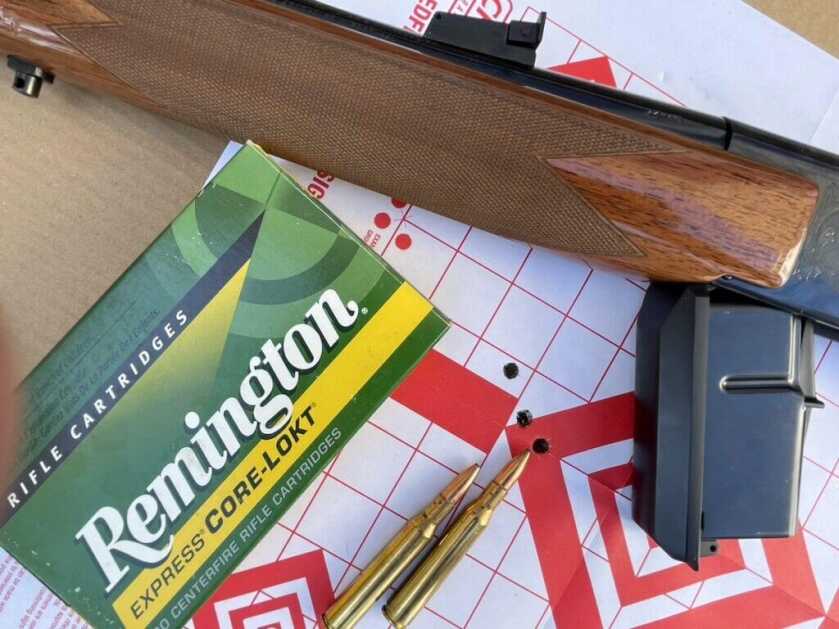
I wanted to see what type of accuracy I could squeeze out of the BAR with popular and inexpensive ammo, so I used Remington Core-Lokt soft points in 130- and 150-grain bullets. A scope could easily be mounted since it is drilled and tapped. I decided to shoot at 50 yards and used my range bag as a rest. Starting with the 150-grain load, my best three-shot group measured 1.79 inches and averaged 1.85 inches. I thought this was good using open sights. Average muzzle velocity was 2735 fps, and muzzle energy averaged 2492 ft-lb. With the 130-grain ammo, my best three-shot group measured 1.20 inches, and I averaged 1.38 inches. Even better. The BAR is an easy rifle to shoot. Muzzle velocity averaged 2698 fps and muzzle energy averaged 2101 ft-lb.
We tend to wrap ourselves around an axle when talking rifle accuracy. The fact is, most rifles are more accurate than we can shoot them. Some shooters gripe about the accuracy in semi-automatic rifles, and they are right. An automatic is not as accurate as some bolt-action rifles, but you need to put your shooting into context. Are you shooting a 1,000 yards or is your typical hunting distance out to 200 yards, maybe 300 yards? The BAR is a hunting rifle, and I would use either of the loads tested for hunting in a New York minute. In fact, the mild recoil offers a fast follow-up shot, providing peace of mind to place a second hit if needed. The trigger pull weight on the BAR averaged 4.7 pounds. Could it be better? Heck, yes, but it is serviceable.
What I really noticed after the first few shots was the mild recoil. The gas system helps eliminate the jolt. Not that the .270 Win. is a shoulder slammer. Recoil was pleasant and, more importantly, had less effect on my aim compared to a bolt-action in the same caliber. The rifle cycled flawlessly.
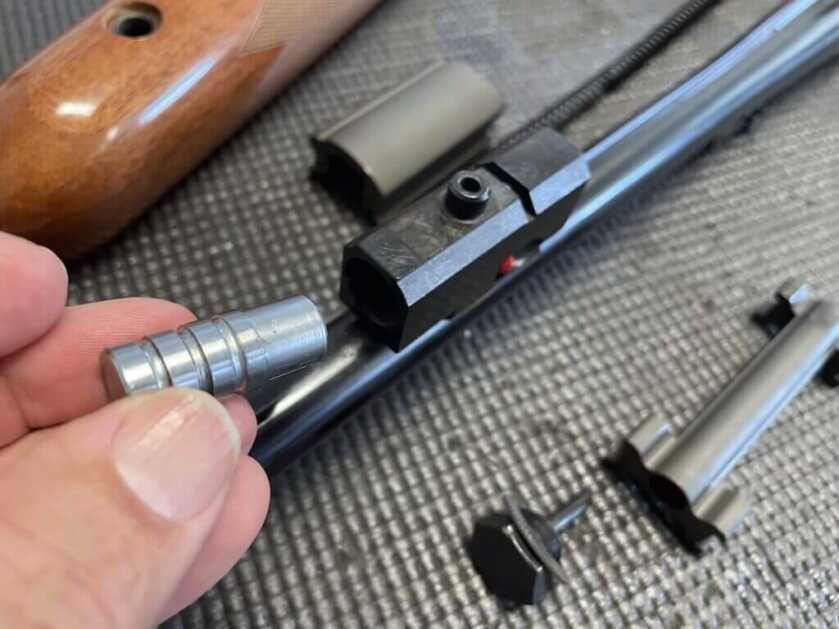
Older BARs that have been stored incorrectly can get a bad reputation. Remember when spraying WD-40 was the proper way to store a gun? WD-40 in storage creates a beautiful shellac-like finish that completely gums up the action, especially the piston on a BAR. It will make a manual repeater out of your semi-auto rifle. This is where some BARs get a bad rap. Not from the design, but improper storage and maintenance. If you inherited a BAR, do yourself a favor and clean the piston and chamber. Gas bleeds out of the barrel port to operate the piston, and gummy varnish in the piston will cause the rifle not to cycle and jam.
Browning BAR Mk II Safari Specifications
| Action | Semi-Auto, gas-operated, rotating bolt |
|---|---|
| Caliber | .270 Win. |
| Finish | Polished blue |
| Stock | Glossy checkered walnut |
| Magazine Capacity | 4-round detachable box magazine |
| Sights | Hooded post front, adjustable u-notch rear |
| Barrel Length | 22 in. |
| Overall Length | 43 in. |
| Weight | 7.8 lb. |
Pros and Cons of the Browning BAR Mk II Safari
- Pros: Mild recoil for a .270 Win., fast follow-up shots, classic walnut-and-blue styling, reliable cycling, and hunting accuracy that is more than serviceable.
- Cons: Trigger could be better, older rifles can suffer from neglect and gummy gas systems, and the platform is less fashionable today than modular black rifles.
Final Verdict on the Browning BAR Mk II Safari
What the BAR does well is tame the recoil of high-power rifle calibers. Your shoulder doesn’t get slammed from the recoil, nor is your field of view knocked out during recoil, as it can be with a bolt-action rifle. If you have the opportunity to shoot a Browning BAR, do it. In fact, after you shoot a BAR and check it off your bucket list, you might want to hunt with one and check that off your list, too. That is the charm of this rifle. The Browning BAR review starts with nostalgia, but it ends with a rifle that still makes a lot of practical sense.
Related Reads from GunsAmerica Digest
- Browning BAR Mk 4: Next Gen. Autoloading Hunting Rifle
- Tested: Browning’s New Tack-Driving X-Bolt 2 Speed Rifle
- Heroes Hidden in Plain Sight: The Browning Automatic Rifle
Available on GunsAmerica Now


Robert A. Sadowski is an American writer and journalist.
He has written about firearms and 2A issues for decades, and has trained with some of the country’s finest firearm instructors in handguns, rifles/carbines, shotguns and long-range shooting. He has also had the opportunity to interview numerous individuals deeply involved in protecting our 2nd Amendment.
He a is a frequent contributor to numerous gun-enthusiast publications, a few of which include:
- TheArmorylife.com
- TheTruthAboutGuns.com
- GunsAmerica.com
- GunBroker.com
- Gun-Tests.com
- Shooting Illustrated
- SHOT Business
- Gun Digest
Sadowski is also the author of numerous gun books, including: “9MM — Guide to America’s Most Popular Caliber” and “Book Of Glock,” both of which were #1 new releases on Amazon. He also wrote the popular DIY gun book series: Shooter’s Bible Guide to Firearms Assembly, Disassembly, and Cleaning Volume 1 and Volume 2. Other gun books authored by Sadowski include “50 Guns That Changed the World,” and edited “The M16A1 Rifle: Operation and Preventive Maintenance”originally published by the U.S. Department of the Army. He also edits the annual “Gun Trader’s Guide” to firearm values.
Sadowski is also the Treasurer/Secretary of the GLOCK Collectors Association, a non-profit organization with the mission to educate and preserve: Educate the public on the models, variations, and commemoratives built by GLOCK, as well as provide members with information on GLOCK serial numbers, importation, and other facts unique to GLOCK pistols.
I have two BARs. One is a 1980s model in .243. Its fit and finish has typical Browning excellence. It shoots 1 inch with several 100 grain loads. I do not like the hokey, politically correct and awkward magazine set-up. Also, you cannot ease the bolt forward to chamber the first round. You have to noisily slam it closed to feed properly. Other FTFs occur when the head of the top cartridge pivots down and the bolt overrides the top round. I have four magazines. They all do the same thing. Another problem is the bolt not fully closing. You will get a disheartening “click” at the worst time.
My other BAR is actually an FN AR308. It is similar to the DRM variant. It takes conventional detachable mags (Nice! but expensive). In .308, it has a polymer stock and a wonderful index mark to visually ascertain when the action is fully closed (or not). Groups are disappointing at about 1 1/2″ at 100 yds.
I always wanted one in .30-06 for as long as I can remember but the big question was always accurate and reliability.
I can’t imagine why anyone would test the accuracy with open sights, 3 round groups and at 50 yards. Throw a scope on it and do some 5 round groups at 100 yards. That at least gives pretty much everyone an idea of it’s potential or in this case as it seems, lack there of.
That kind of accuracy at 50 yards is pretty bad. Is it good enough for a 100 yard hunting rifle? Probably but why would you? You see a bruiser of a whitetail come out at 300 yards and taking the shot becomes an ethical issue. You’re just as likely hoof shoot it as hit the vital area.
It’s a super cool gun, let it show what it can do. Put some glass on it and try a variety of ammo, 5 shot groups at 100 yards and if you have the range, stretch it 300 and see what accuracy it’s capable of. I’d love to read that article. You gave us the meat but the potatoes were no bueno.
I received my grandfathers 30-06 hunting rifle after he past. I use it for everything from Elk to deer, bear. I got one bear running on the side of a mountain left to right at 530 yards into the top of the heart. It was the third shot. Turned out someone else was also shooting at it and filled it with lead in the hind end. I was using the green tip round and found that plastic in the heart meat.
I never ever want to see an accuracy write up of a capable rifle using only iron sights.
Please just leave it out, and write “open sights, variable results based on user” or some BS like that to save two paragraphs of words that do nothing to demonstrate what the rifle is actually capable of.
When I was a young boy, I studied ballistic charts and dreamed of a BAR in 7mm Remington Magnum. My dream finally came true, as Pop eventually traded for a Belgian made BAR, in my dream caliber. I shot that rifle for over a decade, and killed several deer with it. As I became interested in accuracy however, I discovered the BARs Achilles Heel. With a fine, Leupold 3×9 scope, and stable benchrest, I found the gun just would NOT group. I’m not a hand loader, but I shot a wide variety of ammo makes, and bullet weights, without producing anything better than 2.5 MOA (three shot group) at the very best. To cut this story short, I sent that BAR back to Browning TWICE for this issue. They checked everything and recrowned the barrel both times. It made no difference whatsoever. I eventually sold the gun, even though it was a Belgian Browning. It just wouldn’t group any better than minute-of-deer. Some folks may have BARs that shoot less than one MOA, but those are the exceptions.
About the target you displayed above… I certainly wouldn’t use that picture as an example of accuracy. I produce better groups at 50 yards with irons, using any of my Marlin lever guns. Put a decent scope on that BAR and discover how it truly groups. Maybe it’s a good one?
I have a Belgian made BAR in 30-06. I guess it’s a Grade1 but in my eyes it’s absolutely beautiful. No black plastic can take the place of the walnut nor can Cerakote replace the bluing. As Robert Sadowski stated, the recoil is nothing compared to a bolt or pump gun. Black guns are all the rage, but for looks they’ll never outshine blued steel and walnut.